

Green Hydrogen: Fueling the Next Era of Clean Energy
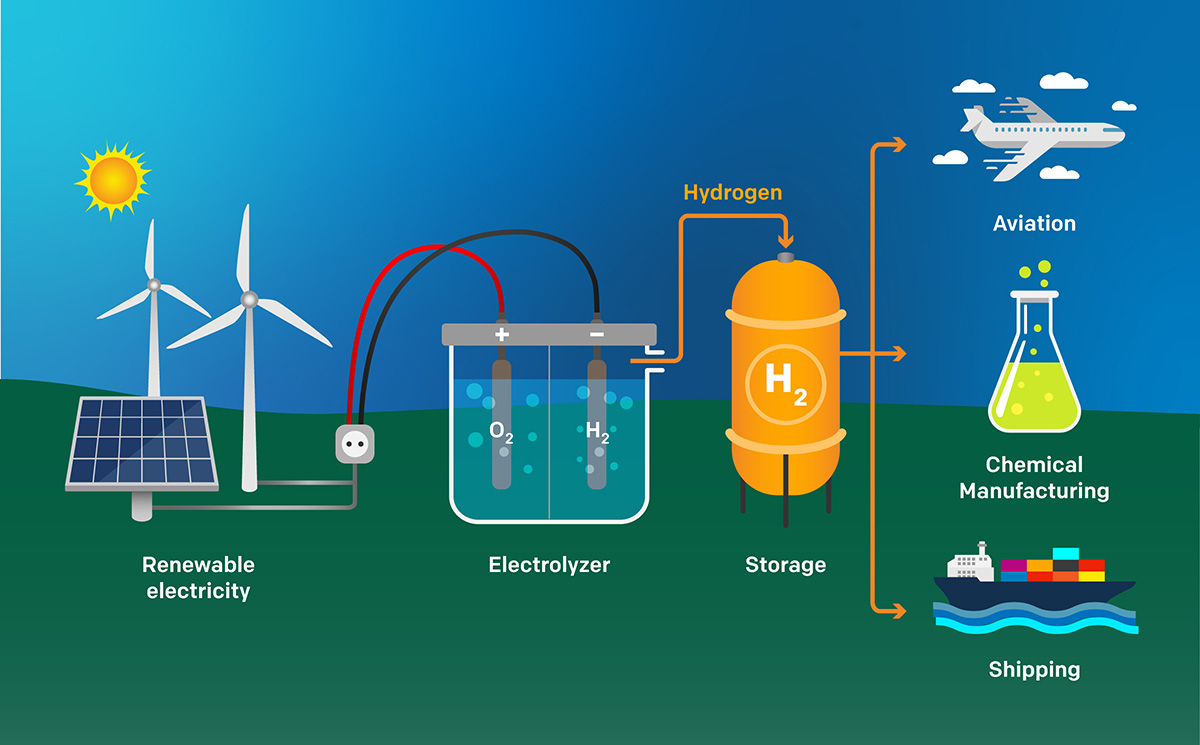
As the global demand for clean and sustainable energy continues to grow, green hydrogen is emerging as one of the most promising solutions for a carbon-free future. Produced using renewable energy sources such as solar and wind, green hydrogen offers a clean alternative to fossil fuels without emitting harmful greenhouse gases. It represents a major breakthrough in the transition toward sustainable energy systems across industries and economies.
Unlike conventional hydrogen production methods that rely on natural gas and emit carbon dioxide, green hydrogen is generated through electrolysis powered by renewable electricity. This process splits water into hydrogen and oxygen, creating a completely clean fuel that can be stored, transported, and used across multiple applications, from power generation to heavy industries.
What Makes Green Hydrogen Unique?
Green hydrogen stands apart because of its zero-emission production process. By using renewable energy, it eliminates the carbon footprint typically associated with hydrogen generation. This makes it an ideal energy carrier for sectors that are difficult to electrify, such as steel production, aviation, and long-distance transportation.
Additionally, hydrogen has a high energy density, making it efficient for storing large amounts of energy over long periods. This capability allows it to complement renewable energy sources by acting as a storage medium, ensuring energy availability even when solar or wind generation fluctuates.
Applications Across Industries
The versatility of green hydrogen makes it applicable across a wide range of industries. In the power sector, it can be used for grid balancing and long-term energy storage. In transportation, hydrogen fuel cells are powering vehicles such as buses, trucks, and even trains, offering a clean alternative to diesel engines.
Industrial sectors are also adopting hydrogen to reduce emissions. For example, in steel manufacturing, hydrogen can replace coal in the production process, significantly lowering carbon emissions. This transition is crucial for achieving global climate targets and reducing industrial pollution.
Benefits for a Sustainable Future
One of the key benefits of green hydrogen is its ability to decarbonize sectors that cannot rely solely on electricity. It provides flexibility in energy usage, supports renewable integration, and reduces dependency on fossil fuels. As technology advances, production costs are expected to decrease, making hydrogen more accessible and economically viable.
Furthermore, green hydrogen promotes energy independence by enabling countries to produce their own clean fuel using locally available renewable resources. This reduces reliance on imported fuels and enhances energy security on a global scale.
Challenges and the Road Ahead
Despite its potential, green hydrogen faces several challenges, including high production costs, infrastructure limitations, and the need for large-scale renewable energy capacity. Developing efficient storage, transportation, and distribution systems is essential for its widespread adoption.
Governments and private sectors worldwide are investing heavily in hydrogen technology, aiming to scale production and improve efficiency. With continued innovation and policy support, green hydrogen is expected to play a critical role in the global transition to clean energy.
Conclusion
Green hydrogen is more than just an alternative fuel—it is a key enabler of a sustainable and decarbonized future. By integrating renewable energy with advanced technology, it offers a pathway to cleaner industries, efficient energy systems, and reduced environmental impact. As adoption grows, green hydrogen will become a cornerstone of the global energy transition, powering the world toward a greener tomorrow.
Leave a Reply